A patient pays an estimated $600 before a procedure. Several weeks later, the insurance claim is finalized and the patient’s actual responsibility is only $425.
The patient is now owed $175.
From the patient’s perspective, the solution seems simple: return the money. Inside the practice, however, that refund may have to pass through billing, insurance verification, accounting, management approval and the payment system before it reaches the patient.
That process can take weeks—or disappear into a backlog until the patient calls.
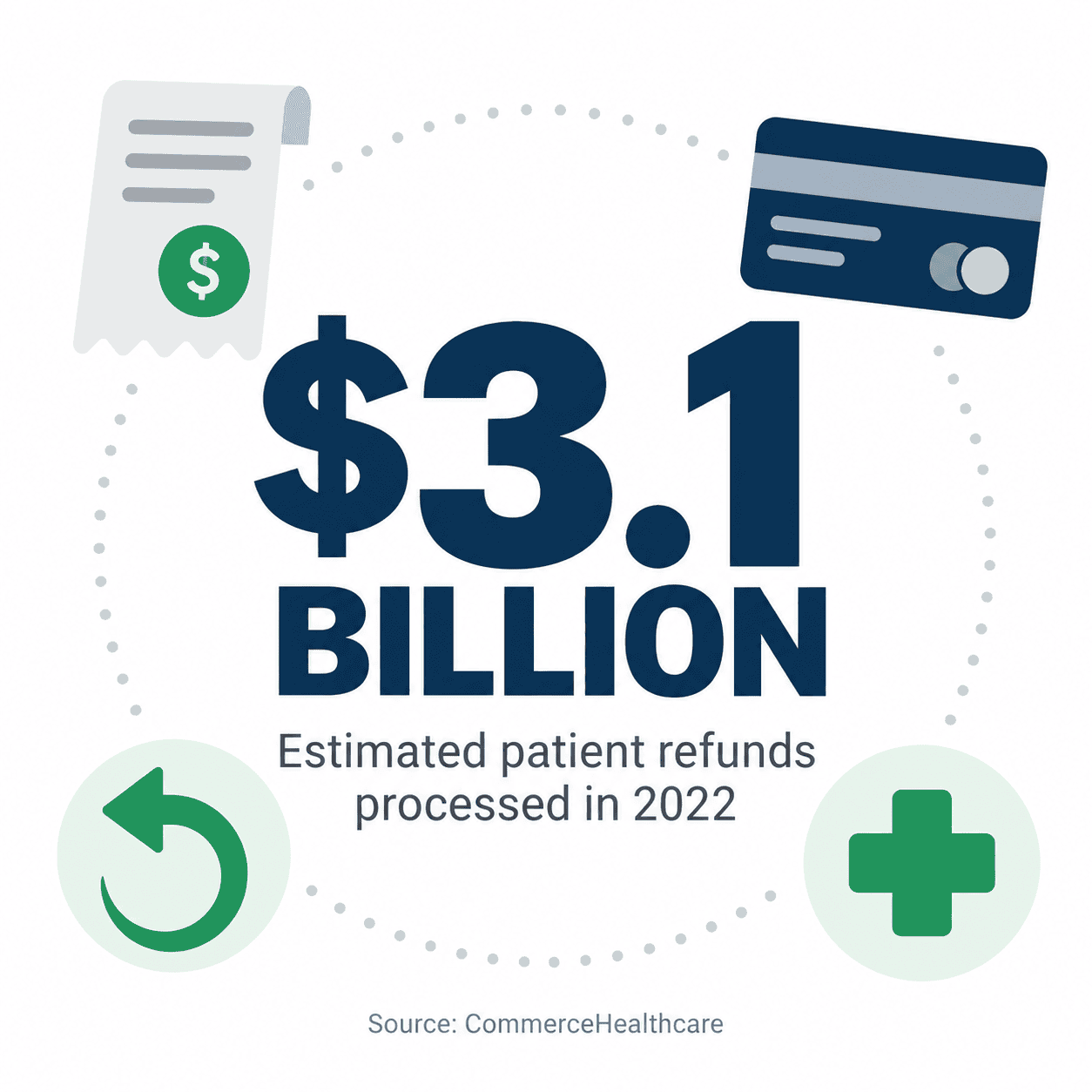
Patient refunds are not a minor accounting issue. CommerceHealthcare estimated that healthcare organizations processed approximately $3.1 billion in patient refunds in 2022. As more providers collect deposits, estimated patient responsibility and payment methods before service, the number of accounts requiring adjustments and refunds may continue to grow.
A slow refund process ties up staff, complicates reconciliation and damages patient trust. The good news is that many delays are operational problems that practices can correct.
Why Patient Refunds Are Becoming More Common
Medical practices are under pressure to collect more of the patient’s expected responsibility before treatment. Waiting until insurance processes a claim can leave the practice chasing a balance months after care was delivered.
A 2026 PayZen and Healthcare Financial Management Association survey found that 91.5% of surveyed health systems had some form of pre-service payment policy, up from 81.3% the year before. Organizations with a pre-service policy reportedly collected more than twice as much pre-service revenue as those without one.
Collecting earlier can improve cash flow, but it also creates a new responsibility: promptly identifying and returning overpayments when the final balance is lower than the estimate.
Refunds commonly result from:
- Insurance paying more than anticipated
- A deductible or coinsurance estimate changing
- Coordination-of-benefits adjustments
- Contractual insurance adjustments
- Duplicate patient payments
- A canceled or rescheduled procedure
- A treatment plan changing after a deposit was collected
- A patient paying online after a mailed payment was already sent
- A card being charged twice
- A payment being posted to the wrong patient or encounter
- Financial assistance being approved after payment
- A credit being transferred from another account
None of these situations is particularly unusual. The challenge is that the information needed to approve a refund often exists in several different systems.
Why Does It Take So Long to Receive a Medical Refund?
1. The Practice Is Waiting for Insurance to Finalize the Claim
The practice may know that an account has a credit balance without knowing whether the entire credit belongs to the patient.
An insurance claim can be reprocessed, denied, appealed or adjusted. Another provider may also submit a related claim that affects the patient’s deductible. If a practice refunds too early and the claim changes again, it may have to ask the patient to return part of the money.
That does not mean every refund should be held indefinitely. It means the practice needs a defined standard for determining when insurance activity is sufficiently final to release the credit.
Insurance uncertainty is widespread. KFF found that 27% of insured adults said their health plan had paid less than they expected on a medical bill during the previous year. Another 18% said insurance paid nothing for care they believed would be covered.
These differences between estimates and final benefits help explain why both unexpected patient balances and unexpected credits occur.
2. No One Clearly Owns the Refund Process
In many practices, the front desk accepts payments, the billing team posts insurance adjustments and the accounting team issues refunds.
Everyone touches part of the process, but no one owns the entire process.
A staff member may identify a credit and assume billing will handle it. Billing may wait for insurance verification. Accounting may not receive the refund request until the patient calls. If approval is required from a manager or practice owner, the request may sit in another queue.
Without clear ownership, refunds become something staff address when they have time instead of a routine part of the revenue cycle.
3. Credit Balances Are Reviewed Too Infrequently
Some practices review patient credit balances only once a month—or only when a patient requests a refund.
That means the delay starts before the refund process even begins.
A weekly credit-balance report allows the practice to identify:
- Newly created credits
- Credits waiting for insurance review
- Approved refunds that have not been issued
- Refunds that failed or were returned
- Small balances that have remained unresolved
- Credits sitting on inactive patient accounts
A regular review is especially important for practices that collect deposits or estimated patient responsibility before service.
4. The Original Payment Is Difficult to Locate
Before issuing a refund, staff should determine how the patient originally paid.
Was the payment made by:
- Credit or debit card
- HSA or FSA card
- ACH or electronic check
- Cash
- Paper check
- Payment link
- Online portal
- Recurring payment plan
- Multiple payment methods
If the patient paid with more than one method, the practice may need to determine how much should be returned to each source.
Finding that information can be unnecessarily difficult when the payment system, practice management system and accounting records do not share consistent transaction details.
5. The Practice Relies on Manual Approvals
Approval controls are important. A staff member should not be able to issue a large refund without appropriate review.
The problem arises when every refund follows the same manual process regardless of amount or reason. A $20 duplicate payment may wait for the same approval as a $2,000 surgical deposit.
Practices can maintain control while moving routine refunds faster by establishing approval levels. For example:
- Designated billing employees can approve refunds up to a set amount
- A billing manager reviews mid-sized refunds
- Large or unusual refunds require administrator or owner approval
- Refunds involving suspected fraud receive additional review
- Every refund is recorded in an auditable log
The appropriate limits will vary by practice, but the underlying goal is the same: match the level of review to the level of risk.
6. Refunds Are Issued in Batches
Some practices process refunds only on a particular day of the month. Others send approved requests to an outside bookkeeper or centralized accounting office.
Batch processing may be convenient internally, but it adds waiting time for the patient. A refund approved the day after the monthly cutoff could remain untouched for several more weeks.
A weekly schedule—or automated processing where appropriate—can shorten the delay without requiring staff to handle refunds individually every day.
7. The Practice Lacks the Information Needed to Explain the Credit
A credit balance alone does not tell the whole story.
Staff may need to compare:
- The original estimate
- The patient’s payment
- The insurance explanation of benefits
- Contractual adjustments
- Subsequent charges
- Prior credits
- Payments applied to related encounters
If those records are unclear, the practice may hesitate to issue a refund because it cannot confidently explain why the credit exists.
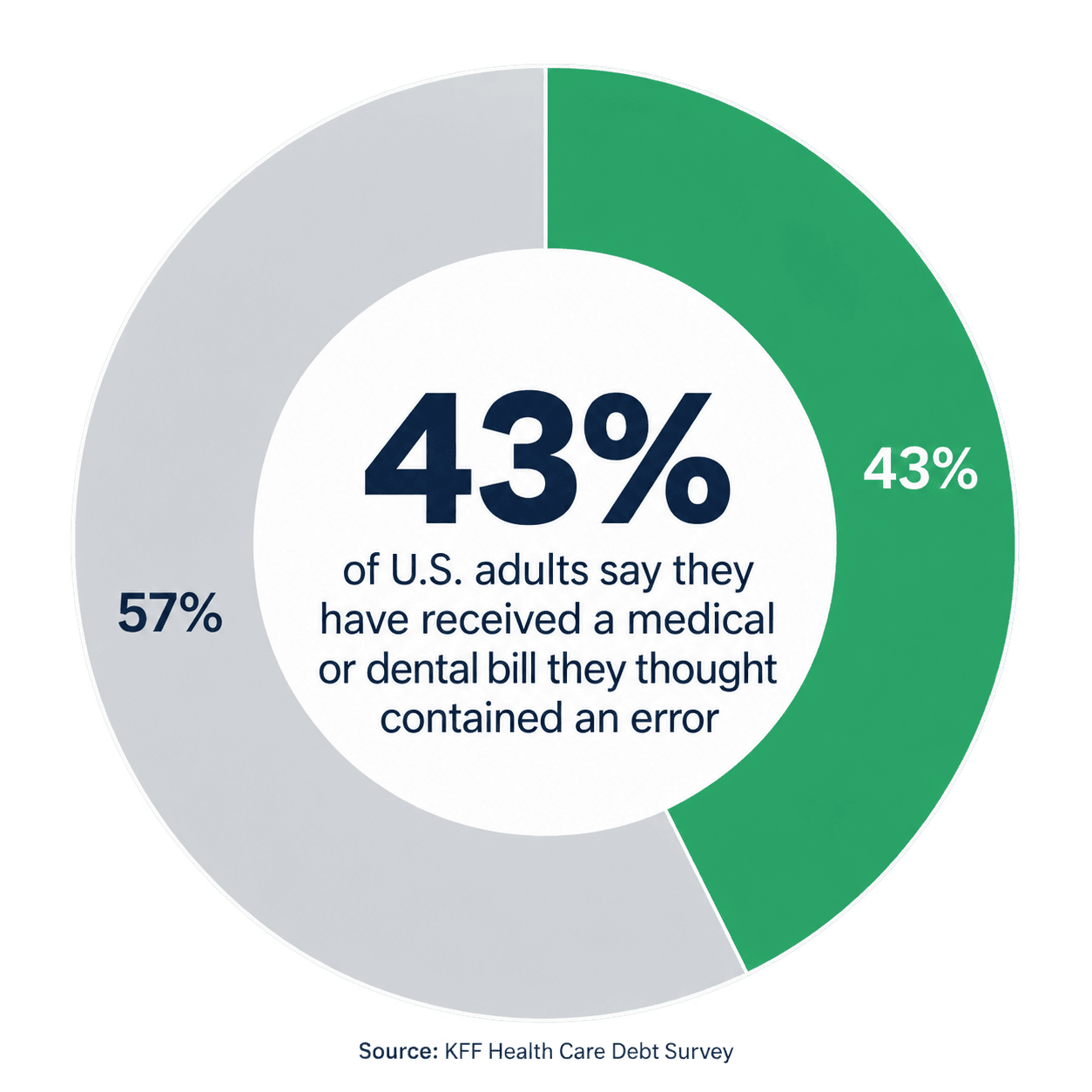
That uncertainty affects patients as well. A KFF survey found that 43% of adults said they had received a medical or dental bill they believed contained an error.
Even when the account is technically correct, confusing statements and unexplained adjustments can make patients believe it is not.
Why Slow Refunds Create Bigger Problems
They Damage Patient Trust
A patient who is expected to pay promptly will reasonably expect the practice to return an overpayment promptly.
When a refund takes weeks and requires repeated phone calls, the patient may feel the practice is treating its own money differently from the patient’s money.
That experience can influence reviews, referrals and whether the patient returns.
They Increase Calls and Administrative Work
A slow refund creates work at every stage.
The patient calls the front desk. The front desk contacts billing. Billing checks with accounting. Accounting looks for approval. Someone then has to call the patient back.
If the refund remains unresolved, the cycle repeats.
A clearly communicated refund timeline reduces status calls and gives staff a consistent answer.
They Can Lead to Payment Disputes
If patients cannot get a clear response, they may dispute the original transaction with their card issuer.
Learn more about protecting your practice from chargebacks.
That turns a routine refund into a chargeback that requires documentation, staff time and a formal response. The disputed amount may also include money the practice was legitimately entitled to retain.
Responding quickly to a known credit is usually easier than defending a dispute later.
They Make Financial Reporting Less Reliable
Unresolved patient credits can distort accounts receivable and make it harder to understand the practice’s true financial position.
A large credit-balance total may indicate:
- Estimates are routinely too high
- Payments are being posted incorrectly
- Insurance adjustments are delayed
- Duplicate payments are not being detected
- Refunds are approved but not processed
- No one is regularly reviewing inactive accounts
Refund data should be treated as operational information, not simply accounting cleanup.
They Affect Financially Vulnerable Patients
Healthcare billing already creates significant financial pressure. KFF estimates that Americans owe at least $220 billion in medical debt, including approximately 14 million adults who owe more than $1,000.
For a patient managing deductibles, prescriptions and household bills, even a relatively small delayed refund can matter.
The CFPB has also reported that complaints about collection attempts for medical bills consumers said they did not owe increased 31% from 2018 through 2021. Those complaints included bills that had already been paid, were covered by insurance or had been addressed through financial assistance.
Accurate balances, clear communication and timely corrections help keep practice errors from becoming patient financial emergencies.
A Better Patient Refund Process
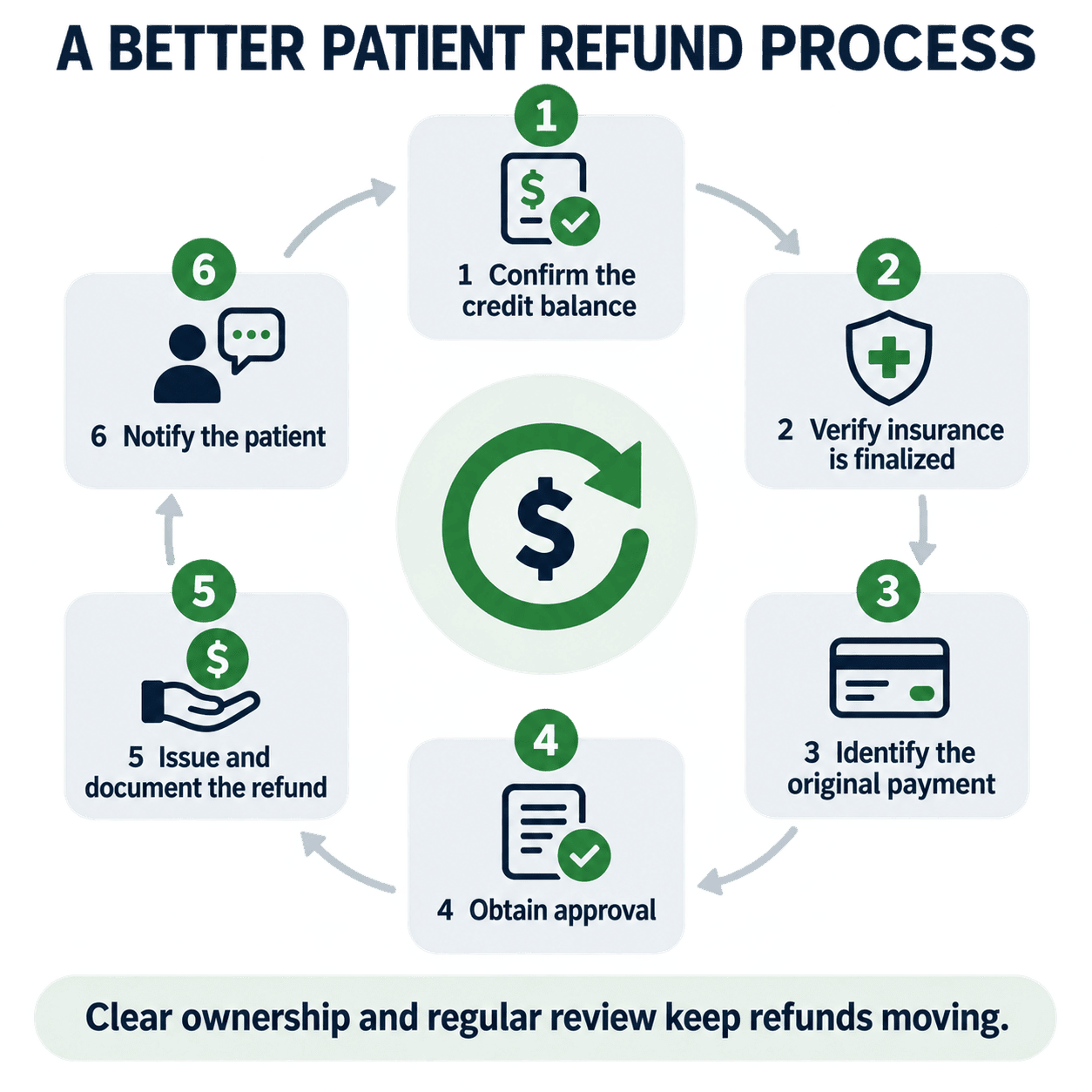
A good refund workflow should be controlled, documented and easy for staff to follow.
Step 1: Identify Credit Balances Regularly
Run a patient credit-balance report at least weekly. Separate new credits from those already under review.
Assign each account a status, such as:
- Insurance pending
- Research required
- Patient documentation required
- Approved
- Refund issued
- Unable to deliver
- Applied with patient authorization
Avoid leaving credits in an undefined general queue.
Step 2: Confirm the Balance Belongs to the Patient
Review the final insurance determination, contractual adjustments, related encounters and any pending claims.
Confirm that the payment was not already refunded, transferred or applied elsewhere.
If the account involves government benefits, financial assistance or another payer, follow the rules applicable to that program. Requirements and deadlines can vary by state, payer contract and type of payment, so practices should obtain legal or compliance guidance when necessary.
Step 3: Locate the Original Transaction
Record:
- Original payment date
- Amount
- Payment method
- Transaction reference
- Location or channel where it was accepted
- Amount being refunded
- Reason for the refund
Whenever practical and consistent with processor requirements, return card payments through the original transaction rather than issuing cash or a check. This creates a clearer transaction trail and can reduce fraud risk.
Step 4: Route the Refund for the Correct Approval
Create written approval thresholds and designate backup approvers so refunds do not stop when one manager is unavailable.
The approval record should show:
- Who reviewed the account
- Who approved the refund
- The reason for the credit
- The amount authorized
- Any supporting documentation
Step 5: Issue and Document the Refund
Once approved, process the refund promptly and record the refund confirmation in the patient’s account.
Remember that “processed” does not always mean “visible in the patient’s bank account.” Card issuers and financial institutions may take additional time to post the credit.
Staff should distinguish between:
- Waiting for practice review
- Approved but not yet processed
- Processed by the practice
- Posted by the patient’s financial institution
Step 6: Notify the Patient
Send a secure email, text or portal message confirming:
- The refund amount
- The payment method receiving the refund
- The date it was processed
- A reasonable expectation for posting
- A contact method for questions
Do not include full card numbers or unnecessary protected health information.
Proactive notification reassures patients and reduces follow-up calls.
Step 7: Measure the Process
Track several basic refund metrics:
- Total patient credit balances
- Number and value of refunds
- Average days from credit identification to refund
- Percentage completed within the practice’s target
- Most common refund causes
- Number of patient refund inquiries
- Number of payment disputes related to unresolved credits
- Refunds by department or location
These metrics can reveal problems elsewhere in the revenue cycle. If one service frequently generates overpayments, the estimate may need to be adjusted. If one location produces more duplicate charges, staff training or equipment configuration may be the issue.
Preventing Refunds Before They Happen
Not every refund can be prevented. Insurance estimates will never be perfect, and treatment plans sometimes change.
Practices can still reduce avoidable overpayments by:
- Improving patient-responsibility estimates
- Confirming insurance before collecting large deposits
- Clearly identifying payments as estimates
- Avoiding duplicate entry across disconnected systems
- Using payment technology with detailed transaction reporting
- Requiring unique staff logins
- Reconciling daily settlements with patient accounts
- Reviewing pending online payments before accepting another payment
- Maintaining clear cancellation and refund policies
- Training staff to confirm whether a payment has already been made
- Giving patients itemized receipts
The goal is not to stop collecting before service. It is to collect responsibly and create an equally reliable process for correcting the final balance.
Modern Payment Technology Can Make Refunds Easier
The payment platform cannot determine what a patient owes after insurance, but it can make transactions easier to trace and manage.
Useful capabilities include:
- Searchable transaction reporting
- Original-transaction refunds
- User-level permissions
- Refund approval controls
- Clear settlement records
- Location-level reporting
- Payment links and online payment history
- Secure cards on file
- Virtual terminal reporting
- Exportable reconciliation data
Practices should also consider what happens to transaction history when changing processors. Historical reports and refund access should be part of the transition plan—not an afterthought.
Treat Refunds as Part of the Patient Experience
Practices put significant effort into scheduling, check-in, clinical care and collecting payment. The refund process deserves the same attention.
A refund is often the last financial interaction a patient has with the practice. When it is accurate, prompt and clearly communicated, it reinforces trust. When it disappears into an internal queue, it can undermine an otherwise excellent care experience.
PayLow Pro helps medical, dental and veterinary practices simplify how they accept, track and manage payments. With modern payment technology, flexible ways to pay and detailed reporting, practices can create a payment experience that works better for both patients and staff.
If slow refunds, disconnected reports or hard-to-find transactions are creating extra work for your team, contact PayLow Pro to discuss a more efficient payment setup.
This article is provided for general informational purposes and is not legal, tax or accounting advice. Refund obligations and timelines may vary based on state law, payer contracts, benefit programs and the circumstances of the payment.