
Insurance reimbursement is only part of the revenue cycle. As patient financial responsibility continues to grow, how—and when—you collect payments has become just as important as getting claims approved.
For years, medical and dental practices have focused on improving revenue cycle performance through better coding, claim submission, denial management, and accounts receivable follow-up. These remain essential components of a healthy practice, but they're no longer the complete picture.
With higher deductibles, larger copays, and increasing out-of-pocket costs, patients are responsible for a greater share of healthcare expenses than ever before. That shift has transformed patient payments from an administrative task into a critical component of financial performance.
Practices that optimize the patient payment experience can improve cash flow, reduce administrative work, lower payment processing costs, and create a more convenient experience for patients.
The Revenue Cycle Doesn't End When the Insurance Company Pays
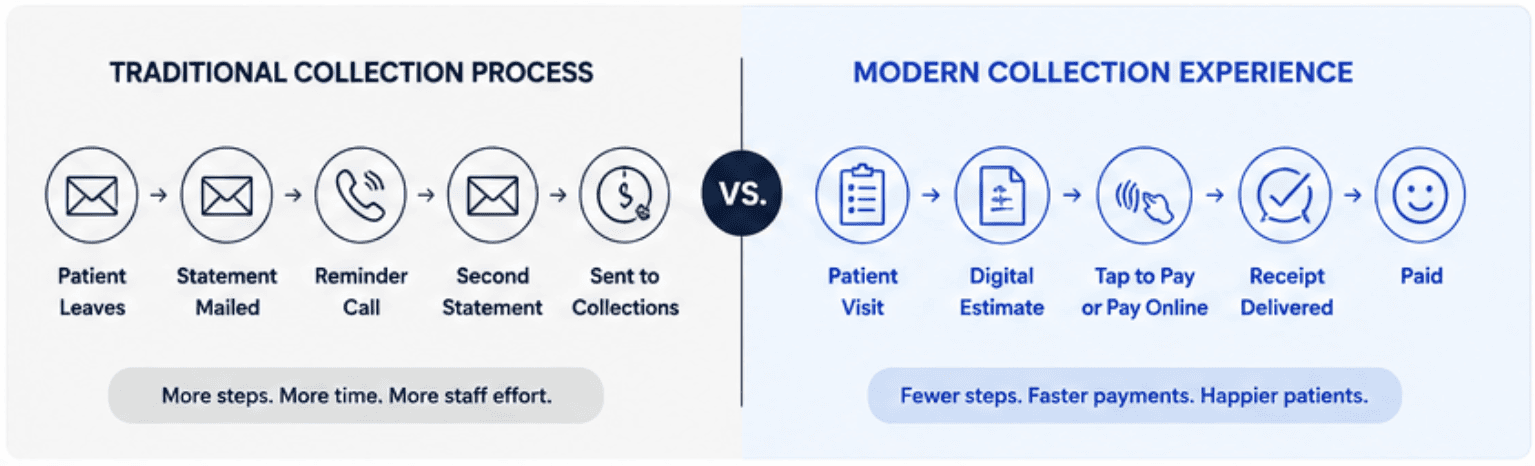
Receiving payment from an insurance carrier is often viewed as the finish line, but in many cases it's only the beginning of the patient collection process.
Outstanding deductibles, coinsurance, elective procedures, and balances remaining after insurance adjudication all require efficient payment collection. Unfortunately, many practices still rely on outdated processes that create unnecessary delays and additional work for staff.
Common challenges include:
- Delayed patient payments after the visit
- Staff spending valuable time collecting outstanding balances
- Limited payment options for patients
- High credit card processing costs
- Manual reconciliation and reporting
- Increased administrative burden for front office teams
While each issue may seem manageable on its own, together they can significantly impact profitability and operational efficiency.
Financial Metrics Every Practice Should Monitor
Most healthcare organizations closely monitor traditional revenue cycle metrics such as Days in A/R, denial rates, clean claim rates, and charge lag. These measurements remain important, but patient payment performance deserves equal attention.
Consider tracking metrics such as:
- Point-of-service collection rate
- Average days to collect patient balances
- Percentage of patient payments collected electronically
- Outstanding patient balances by aging category
- Payment plan participation
- Credit card processing costs as a percentage of collections
These key performance indicators help practices identify opportunities to accelerate cash flow while improving the patient financial experience.
The Hidden Expense Many Practices Overlook
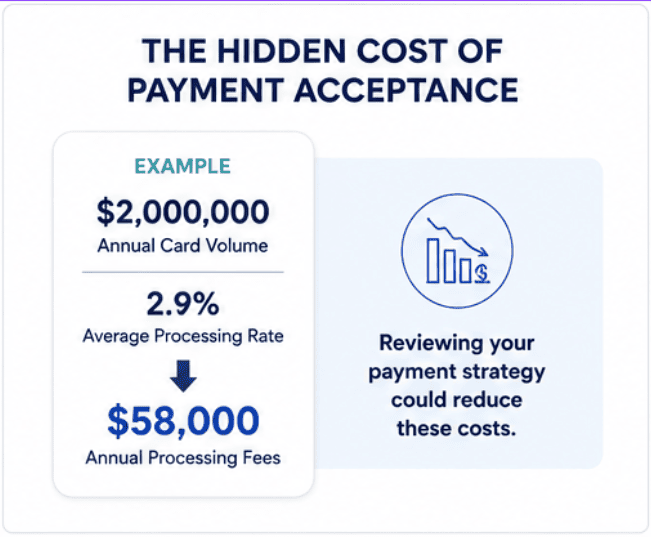
Many medical and dental practices carefully evaluate staffing expenses, supply costs, and insurance reimbursement rates but rarely analyze the true cost of accepting electronic payments.
Credit card processing fees can quietly consume thousands—or even tens of thousands—of dollars each year. As patient responsibility increases, those expenses continue to grow.
Reviewing payment acceptance costs alongside other operating expenses can reveal opportunities to improve profitability without increasing patient volume or reducing the quality of care.
Modern Payment Technology Improves Convenience and Cash Flow
Today's patients expect the same payment convenience they experience in retail and other service industries. Practices that offer flexible payment options often benefit from faster collections and fewer administrative headaches.
Modern payment solutions may include:
- Secure online payment portals
- Text-to-pay and email payment requests
- Mobile payment acceptance
- Recurring payment plans
- Card-on-file technology
- Integrated payment terminals connected to practice management software
- Contactless payment options
By making it easier for patients to pay, practices can improve collection rates while reducing time spent on billing and follow-up.
Reducing Payment Processing Costs
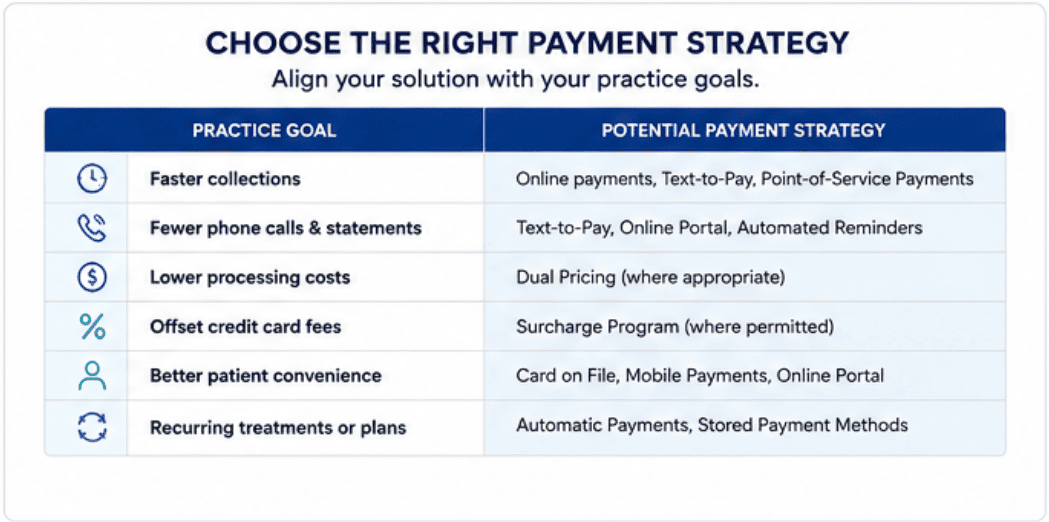
In addition to improving collections, many practices are exploring ways to reduce the cost of accepting credit cards.
Depending on state regulations and the specific needs of the practice, options such as compliant dual pricing or credit card surcharge programs may help offset or significantly reduce payment processing expenses while maintaining full transparency with patients.
Because regulations vary by state and card network requirements, practices should work with an experienced payment provider to determine which solution is appropriate for their business.
Building a More Efficient Revenue Cycle
An effective revenue cycle doesn't stop with claim submission or insurance reimbursement. It extends through the final patient payment.
Practices that combine strong billing processes with modern payment technology can reduce administrative burden, improve cash flow, lower payment acceptance costs, and provide a better overall financial experience for patients.
As patient responsibility continues to grow, medical and dental practices that modernize the payment portion of their revenue cycle will be better positioned for long-term financial success.
Wondering How Much Your Practice Can Save?
PayLow Pro can evaluate your current payment process and identify opportunities to improve patient collections while reducing payment processing costs through modern payment technology, including traditional processing, compliant dual pricing, and surcharge programs where permitted. Contact us today for a complimentary payment analysis.